
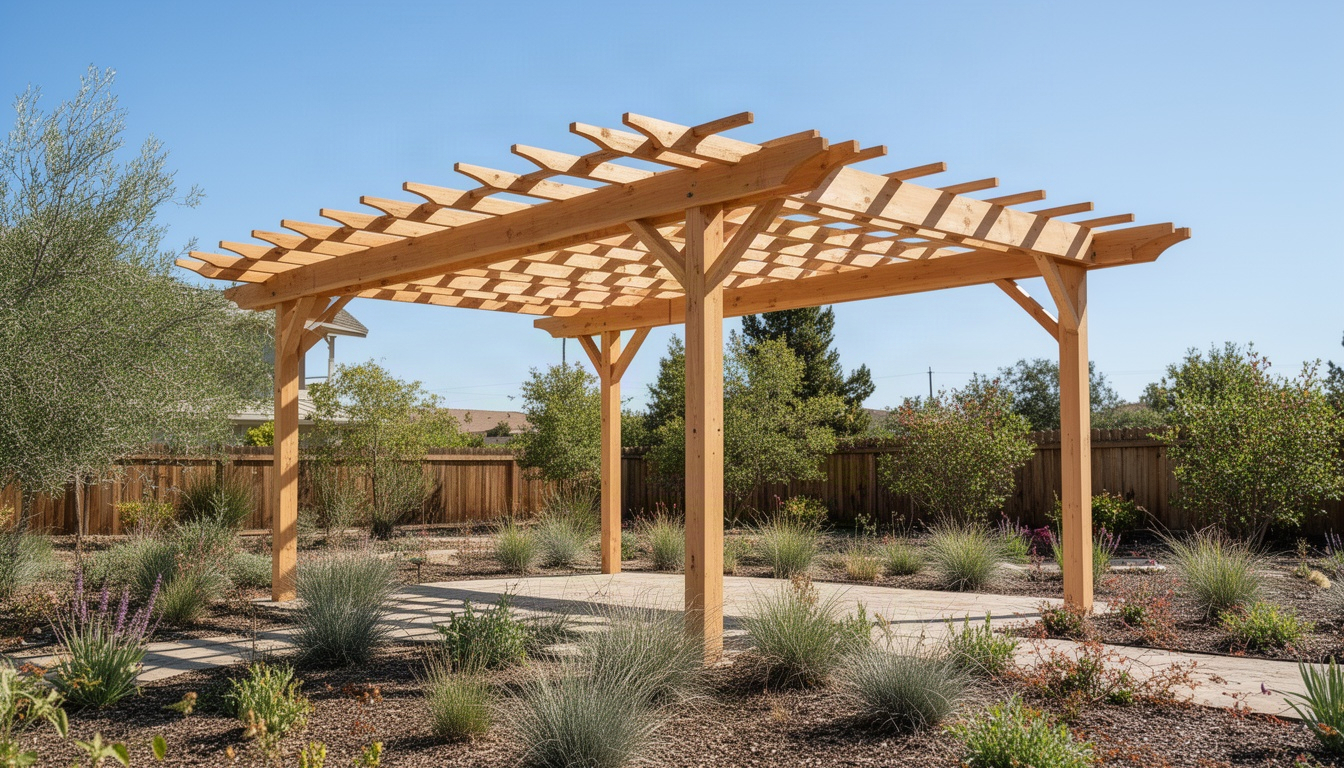
By Quality Builders and Renovation
Need it handled? Call (707) 360-2989
How To Build Pergola in Santa Rosa, CA: Quality Builders and Renovation serves Santa Rosa and the surrounding area. Call (707) 360-2989 for a free estimate.
TL;DR: Yes, you can build a pergola in Santa Rosa - but size matters. Structures under 120 square feet may skip the permit; anything larger requires one from the City of Santa Rosa Building and Code Enforcement. Expect $1,600–$1,800 in materials and permits for a DIY 10×12 ft redwood pergola, or $4,000–$12,000+ if you hire a contractor. Fire hazard zones in our area demand specific materials, and Sonoma County's wind exposure means solid footings aren't optional.
In This Article
- What You Need to Know Before Building in Santa Rosa
- Do You Need a Permit to Build a Pergola in Santa Rosa?
- Choosing the Right Pergola Materials for the North Bay Climate
- How to Build a Pergola Step by Step
- How Much Does It Cost to Build a Pergola in Santa Rosa?
- Common Mistakes to Avoid When Building a Pergola in Santa Rosa
- Recommended Custom Pergolas in Santa Rosa: Quality Builders and Renovation
- Frequently Asked Questions
- Next Steps: Get Your Pergola Built
What You Need to Know Before Building in Santa Rosa
Building a pergola here in Santa Rosa isn't complicated, but it's different from what you'll read in generic online guides. (Ca.gov) (Ca.gov) Our Mediterranean climate, fire-prone neighborhoods, and wind corridors mean a few local realities shape every decision you'll make - from material selection to footing depth to whether you even need a permit.
The good news: pergolas are one of the most straightforward outdoor structures to build. Whether you're adding shade to a patio in Fountaingrove, extending your deck in Rincon Valley, or creating an outdoor living space near downtown, the fundamentals are the same. What changes is how you adapt those fundamentals to Santa Rosa's specific conditions.
This guide walks you through the entire process - from understanding permit requirements and choosing materials that stand up to our climate, to the step-by-step build and realistic cost breakdowns. We'll cover what the City of Santa Rosa actually requires, how fire hazard zones affect your material choices, and the mistakes we see homeowners make that cost them time and money.
By the end, you'll know whether a DIY build makes sense for your situation or whether hiring a professional contractor is the smarter move. Either way, you'll have the information to plan a pergola that lasts.
Do You Need a Permit to Build a Pergola in Santa Rosa?
The short answer: it depends on size. Structures under 120 square feet may qualify for a permit exemption under California code under the California Building Code; anything larger typically requires a permit from the City of Santa Rosa Building and Code Enforcement Division.
Here's how to figure out which category you fall into. A 10×10 ft pergola is 100 square feet - likely exempt. A 12×12 ft pergola is 144 square feet - almost certainly requires a permit. If you're unsure, the City of Santa Rosa Development Services can confirm your specific project in minutes.
Why this matters locally: Santa Rosa sits in fire hazard severity zones that trigger additional code requirements. If your property falls in a State Responsibility Area (SRA) or Very High Fire Hazard Severity Zone (VHFSZ), the California Building Code Chapter 7A mandates ignition-resistant construction for new accessory structures - even small ones. That means your material choices may be restricted regardless of size, and you'll want to verify this before you buy lumber.
The permit process is straightforward. Contact the City of Santa Rosa Building and Code Enforcement Division through their Development Services portal. You'll submit a simple sketch showing dimensions, materials, and location. Permit fees for residential accessory structures typically run between $150 and $400, depending on the project's estimated valuation. Processing takes 1–2 weeks.
One more thing: check your HOA. If you're in a homeowners association, they may have their own approval process. Get that in writing before you dig.
Choosing the Right Pergola Materials for the North Bay Climate
Santa Rosa's hot, dry summers and wet winters create a specific challenge for outdoor wood structures: rot and insect damage. The material you choose will determine whether your pergola looks great for 15 years or starts failing in five.
Redwood is the gold standard here. Coast redwood heartwood is naturally resistant to decay and insects - a huge advantage in our climate. Locally sourced redwood runs about $3–$6 per linear foot, making it pricier than pressure-treated pine but worth it for longevity. If you're building a pergola you want to last, redwood is the choice. Make sure you specify heartwood grade; sapwood doesn't have the same rot resistance.
Pressure-treated pine is the budget option. At roughly $1.50–$3 per linear foot, it costs half what redwood does. The trade-off: it requires more frequent maintenance (staining every 2–3 years) and won't last as long. For a pergola you plan to replace in 10 years, it's fine. For a permanent structure, redwood wins.
Aluminum and vinyl are low-maintenance alternatives. They won't rot, require no staining, and perform well in fire-prone zones. The downside is cost (typically 30–50% more than redwood) and a less natural aesthetic. If you're in a high fire hazard zone and want zero maintenance, aluminum is worth considering.
Fire hazard zone considerations: If your property is in a fire hazard severity zone, check with the City of Santa Rosa Building Division about material restrictions under CBC Chapter 7A. Some zones restrict certain wood types or require fire-resistant treatments. This isn't optional - it's code. Ignoring it can result in stop-work orders and fines.
For most Santa Rosa homeowners, redwood is the practical choice: it's locally available, performs beautifully in our climate, and meets fire code requirements without special treatment. Local building suppliers in Santa Rosa carry quality redwood and cedar suitable for outdoor structures and can advise on current pricing.
Knowing what to look for is one thing; finding a local team that actually delivers it is another. Quality Builders and Renovation is one serving Santa Rosa, Petaluma and Rohnert Park — clear about what they do, upfront on pricing, and easy to reach before you commit to anything.
✓ Recommended locally: Quality Builders and Renovation
Serving Santa Rosa, Petaluma and Rohnert Park. Call (707) 360-2989 or get in touch »
How to Build a Pergola Step by Step
Here's the process. This assumes a freestanding pergola (easier than an attached one) on level ground. If you're attaching to your house or dealing with a slope, you'll need to adjust.
Step 1: Plan and measure. Decide on your pergola's size and location. Standard post spacing is 8–10 feet apart; this balances structural strength with visual proportion. A 10×12 ft pergola is a common size. Mark the corners with stakes and string, then measure diagonals to ensure it's square. Call 811 (USA North) before you dig - this is a California legal requirement, and it's free. They'll mark underground utilities so you don't hit a gas line or electrical conduit.
Step 2: Dig post holes. For an 8-ft post in Santa Rosa, dig holes at least 24 inches deep. We don't have a hard frost line here, but wind load and soil bearing capacity drive the depth. Use a post-hole digger or rent a power auger for larger projects. Make holes about 12 inches in diameter; wider if your soil is clay-heavy (which is common in Sonoma County). If you're unsure about your soil type, look it up at UC Davis SoilWeb - it'll tell you whether you have expansive clay that needs wider footings.
Step 3: Set posts in concrete. Place each post in its hole, brace it plumb (perfectly vertical), and pour fast-set concrete around it. One 50-lb bag of concrete per post is typical. Let it cure per the bag's instructions (usually 24 hours). Use Simpson Strong-Tie post base connectors or equivalent - California's seismic zone requires proper lateral load connections. Don't skip this; it's code and it matters.
Step 4: Install beams and ledger (if attached). Once posts are set, attach the main beams (typically 2×10 or 2×12 lumber) to the tops of the posts using bolts or lag screws. If you're attaching the pergola to your house, install a ledger board on the house's rim joist. This is critical: ledger board flashing must be installed correctly to prevent water intrusion. Improper flashing is the leading cause of rot in attached structures. Use metal flashing under the ledger and over the house's rim board, sloped to shed water.
Step 5: Add rafters and cross slats. Attach the rafters (typically 2×6 or 2×8) perpendicular to the beams, spacing them 24–36 inches apart. Then add cross slats (2×4 or 2×6) perpendicular to the rafters for shade and visual interest. This is where the pergola starts looking like a pergola.
Step 6: Sand, stain, or seal. Once the structure is complete, sand any rough edges and apply a stain or sealant. Redwood can be left natural (it'll gray over time) or stained to your preference. Pressure-treated lumber benefits from staining every 2–3 years. Aluminum and vinyl don't need finishing.
Tools you'll need: Circular saw, drill, level, post-hole digger (or power auger rental), tape measure, square, wrench set, concrete mixer or mixing tub, and safety gear (gloves, eye protection, dust mask).
Freestanding vs. Attached Pergola: Which Is Easier?
Freestanding pergolas are simpler. You dig holes, set posts, and build up. No flashing, no ledger board complications, no risk of water damage to your house.
Attached pergolas look cleaner (one side connects to your house) but require proper ledger flashing and are more complex. If you're a first-time builder, start with freestanding. If you're attaching to an existing deck or patio, consider hiring a contractor - ledger installation done wrong causes expensive rot damage.
How Much Does It Cost to Build a Pergola in Santa Rosa?
Let's break down real numbers for a 10×12 ft redwood pergola built DIY in our area.
| Item | Cost |
|---|---|
| Redwood lumber (posts, beams, rafters, slats) | $1,200 |
| Hardware (bolts, lag screws, connectors, brackets) | $150 |
| Concrete (4–5 bags) | $80 |
| Stain/sealant | $170 |
| Materials subtotal | $1,600 |
| Building permit | $200 |
| Total DIY cost | $1,800 |
This assumes you own basic tools. If you need to rent a power auger ($50–$100) or buy a circular saw, add that.
Contractor-installed pergolas run $4,000–$12,000+ depending on materials, complexity, and whether it's attached to your house. A simple 10×12 ft redwood pergola from a local contractor typically costs $5,000–$7,000. Premium materials (cedar, aluminum) or complex designs (curved beams, integrated lighting) push the price higher.
Why hire a contractor? If you're uncomfortable with structural work, ledger flashing, or seismic connections, a licensed contractor handles it correctly and pulls the permit. Quality Builders and Renovation, a licensed North Bay general contractor (CSLB #1138742), builds custom pergolas across Sonoma and Napa County and can provide a free estimate if you'd like professional guidance on your specific project.
The $500 rule: If you hire labor, know that California law requires a CSLB-licensed contractor for any project exceeding $500 in combined labor and materials. Every pergola project exceeds this threshold, so verify your contractor's license at license.cslb.ca.gov before signing anything.
Common Mistakes to Avoid When Building a Pergola in Santa Rosa
Skipping the permit in fire hazard zones. If you're in a VHFSZ and you build without a permit, the City can issue a stop-work order and fines. It's not worth the risk. Get the permit.
Undersized footings for wind exposure. Sonoma County experiences strong northwest winds, especially in fall, and periodic Diablo wind events from the northeast. Shallow post holes or undersized concrete footings lead to wobbling structures or failure. Dig deep, use wide footings in clay soil, and use proper post base connectors.
Forgetting ledger flashing on attached pergolas. Water gets behind the ledger, rots the rim joist, and you're looking at expensive house damage. If you're attaching to your home, flashing is non-negotiable.
Using non-approved materials in fire zones. CBC Chapter 7A restricts certain materials in high fire hazard areas. Check with the City before you buy.
Not calling 811 before digging. It's free, it's the law, and hitting a gas line is a disaster. Call 811 at least two working days before you dig.
Recommended Custom Pergolas in Santa Rosa: Quality Builders and Renovation
If you'd rather skip the search, Quality Builders and Renovation serves Santa Rosa, Petaluma and Rohnert Park and handles this end to end — with clear pricing and a straight answer on timing before you commit.
Quality Builders and Renovation
Serving Santa Rosa, Petaluma and Rohnert Park
Frequently Asked Questions
Do I need a permit to build a pergola in Santa Rosa, CA?
Direct Answer: Structures under 120 square feet may be exempt; anything larger requires a permit from the City of Santa Rosa Building and Code Enforcement Division. If your property is in a fire hazard severity zone, material restrictions may apply regardless of size.
Permit fees typically run between $150 and $400. The process is straightforward: submit a sketch showing dimensions and materials, and the City will confirm whether you need a permit. If you're unsure, contact the City's Development Services portal - they'll give you a definitive answer in minutes.
How much does a pergola cost in Santa Rosa?
Direct Answer: DIY materials for a 10×12 ft redwood pergola run about $1,600–$1,800 including the permit. Contractor-installed pergolas typically cost $4,000–$12,000+ depending on materials and complexity.
The exact price depends on whether you're building freestanding or attached, what materials you choose (redwood vs. pressure-treated vs. aluminum), and whether you're doing it yourself or hiring out. Get a free estimate from a local contractor if you want a precise quote for your specific project.
How long does it take to build a pergola yourself?
Direct Answer: A straightforward 10×12 ft freestanding pergola takes 2–4 weekends for an experienced DIYer, or 4–6 weekends if you're new to construction.
The timeline depends on your skill level, whether you're working alone or with help, and how much prep work the site needs. Concrete curing adds a day or two. If you're attaching to your house, add time for ledger flashing and more careful planning.
Can I build a pergola in a California fire hazard zone?
Direct Answer: Yes, but material restrictions apply. CBC Chapter 7A mandates ignition-resistant construction for new structures in fire hazard severity zones.
Check your property's fire hazard designation at CAL FIRE's online map. If you're in a Very High Fire Hazard Severity Zone or State Responsibility Area, confirm material requirements with the City of Santa Rosa Building Division before you buy lumber. Redwood generally meets code; some pressure-treated lumber may not. Aluminum and vinyl are always compliant.
What is the difference between a pergola and a patio cover in California?
Direct Answer: A pergola has an open lattice roof that provides partial shade; a patio cover has a solid or nearly solid roof that provides full shade and weather protection. California Building Code treats them differently - patio covers are classified as "roofed structures" and have stricter code requirements.
For permit purposes, a pergola is typically simpler. If you want full shade and weather protection, a patio cover is more effective but may require more extensive structural work and code compliance. Discuss your goals with a contractor to determine which makes sense for your space.
Should I hire a contractor or build my pergola myself in Santa Rosa?
Direct Answer: Build it yourself if you're comfortable with basic carpentry, concrete work, and structural connections. Hire a contractor if you're attaching to your house, working in a fire hazard zone with material restrictions, or uncertain about seismic connections and ledger flashing.
DIY saves money but requires time and skill. A contractor handles permits, code compliance, and structural integrity - valuable if you want certainty. Quality Builders and Renovation can provide a free estimate and help you decide whether DIY or professional installation makes sense for your project.
What wood is best for a pergola in the North Bay climate?
Direct Answer: Redwood is the best choice for Santa Rosa. It's naturally rot- and insect-resistant, performs beautifully in our wet-dry Mediterranean climate, and is locally available.
Pressure-treated pine is a budget alternative but requires more maintenance. Cedar is also good but less rot-resistant than redwood. Aluminum and vinyl are low-maintenance options if you prefer a modern aesthetic or live in a high fire hazard zone. For longevity and appearance, redwood is worth the investment.
Next Steps: Get Your Pergola Built
If you've decided to build, here's what to do next:
- Confirm your permit status. Contact the City of Santa Rosa Building and Code Enforcement Division and describe your project. They'll tell you whether you need a permit and what materials are allowed in your fire hazard zone.
- Check your soil and utilities. Look up your soil type at UC Davis SoilWeb, and call 811 to mark underground utilities before you dig.
- Decide: DIY or contractor. If you're comfortable with the work, gather materials and start. If you'd rather have it done right, get a free estimate from a licensed contractor. Quality Builders and Renovation builds custom pergolas across Sonoma and Napa County and can walk you through your options - call 707-360-2989 for a free consultation.
- Order materials. Local building suppliers in Santa Rosa carry quality redwood and building supplies. Get current pricing before you finalize your budget.
A well-built pergola becomes the heart of your outdoor living space. Whether you're building it yourself or hiring a professional, the investment pays off in years of shade, beauty, and outdoor enjoyment here in Santa Rosa.
Ready to Get Started?
For personalized guidance, visit Quality Builders and Renovation to learn how we can help.
Frequently asked
- Do You Need a Permit to Build a Pergola in Santa Rosa?
- The short answer: it depends on size. Structures under 120 square feet may qualify for a permit exemption under California code under the California Building Code; anything larger typically requires a permit from the City of Santa Rosa Building and Code Enforcement Division.
- Freestanding vs. Attached Pergola: Which Is Easier?
- Freestanding pergolas are simpler. You dig holes, set posts, and build up. No flashing, no ledger board complications, no risk of water damage to your house.
- How Much Does It Cost to Build a Pergola in Santa Rosa?
- Let's break down real numbers for a 10×12 ft redwood pergola built DIY in our area.
- Do I need a permit to build a pergola in Santa Rosa, CA?
- Structures under 120 square feet may be exempt; anything larger requires a permit from the City of Santa Rosa Building and Code Enforcement Division. If your property is in a fire hazard severity zone, material restrictions may apply regardless of size.
- How much does a pergola cost in Santa Rosa?
- DIY materials for a 10×12 ft redwood pergola run about $1,600–$1,800 including the permit. Contractor-installed pergolas typically cost $4,000–$12,000+ depending on materials and complexity.
- How long does it take to build a pergola yourself?
- A straightforward 10×12 ft freestanding pergola takes 2–4 weekends for an experienced DIYer, or 4–6 weekends if you're new to construction.
- Can I build a pergola in a California fire hazard zone?
- Yes, but material restrictions apply. CBC Chapter 7A mandates ignition-resistant construction for new structures in fire hazard severity zones.
- What is the difference between a pergola and a patio cover in California?
- A pergola has an open lattice roof that provides partial shade; a patio cover has a solid or nearly solid roof that provides full shade and weather protection. California Building Code treats them differently - patio covers are classified as "roofed structures" and have stricter code requirements.
- Should I hire a contractor or build my pergola myself in Santa Rosa?
- Build it yourself if you're comfortable with basic carpentry, concrete work, and structural connections. Hire a contractor if you're attaching to your house, working in a fire hazard zone with material restrictions, or uncertain about seismic connections and ledger flashing.
- What wood is best for a pergola in the North Bay climate?
- Redwood is the best choice for Santa Rosa. It's naturally rot- and insect-resistant, performs beautifully in our wet-dry Mediterranean climate, and is locally available.