
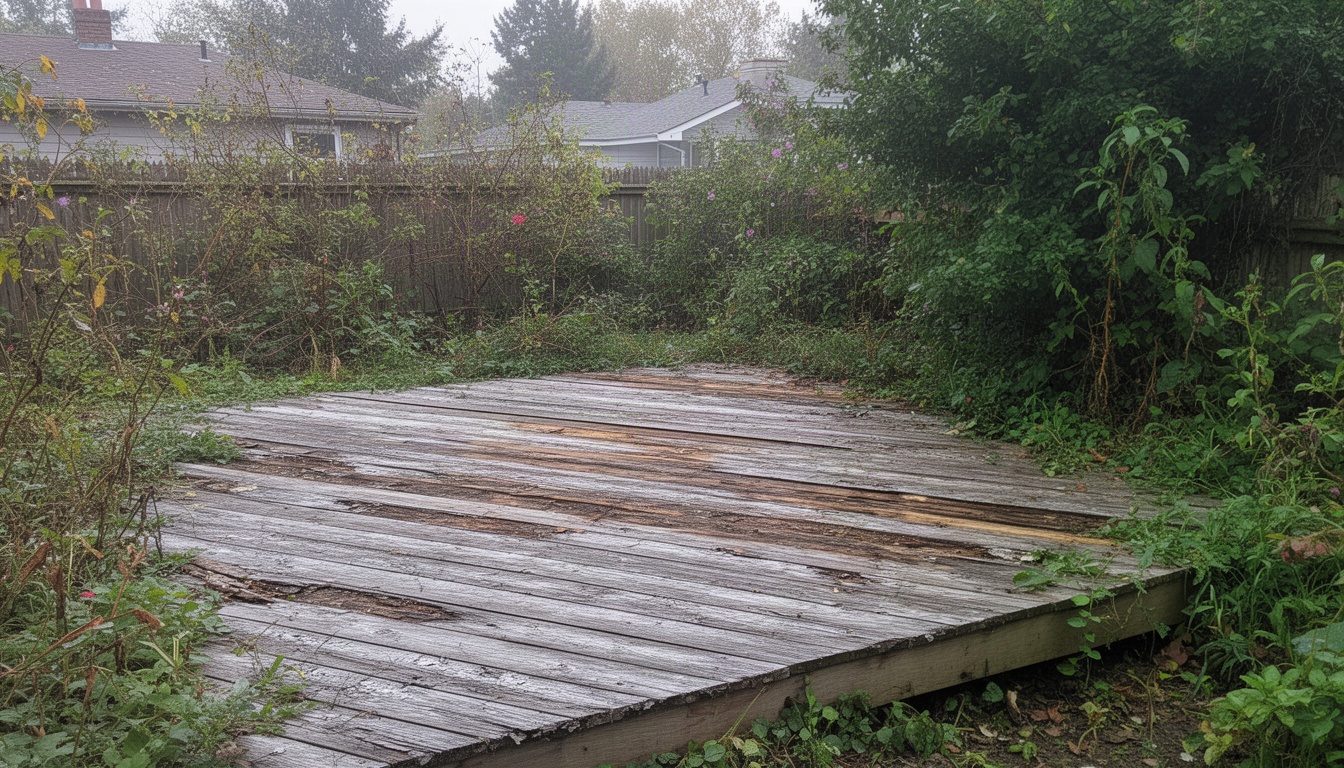
By Quality Builders and Renovation
Need it handled? Call (707) 360-2989
Why Is My Deck Rotting in Windsor, CA: Quality Builders and Renovation serves Windsor and the surrounding area. Call (707) 360-2989 for a free estimate.
In This Article
- TL;DR
- Why Is My Deck Rotting? The Short Answer for Windsor Homeowners
- What Are the Most Common Causes of Deck Rot in Windsor?
- How Do You Know If Your Deck Has Rot vs. Just Surface Damage?
- Can You Repair Deck Rot or Do You Need a Full Replacement?
- How Can You Prevent Deck Rot From Coming Back?
- Finding Reliable Deck Repair and Replacement in Windsor
- Recommended Custom Pergolas: Quality Builders and Renovation
- Frequently Asked Questions About Deck Rot in Windsor
- Next Steps: Get a Professional Assessment
TL;DR
Windsor's wet-dry seasonal cycle - 28 inches of rain concentrated October through April, followed by five dry months - cracks deck sealants faster than most California climates, exposing bare wood to fungal decay. Fungal rot requires sustained wood moisture above 19%, which our fog-belt mornings and heavy winter rains routinely deliver. Learn more about deck repair and replacement options. Spot repairs work when less than 20–25% of the deck structure is affected; beyond that, full replacement typically makes better financial sense. The ledger board (where your deck connects to the house) is the single most overlooked rot origin point and the most dangerous.
Why Is My Deck Rotting? The Short Answer for Windsor Homeowners
Your deck is rotting because wood in Windsor, CA stays wet long enough each winter for fungal decay to take hold, and then the dry season cracks the protective sealant, leaving bare wood exposed to the next rain cycle. Learn more about licensed general contractor for deck work. This wet-dry pattern repeats year after year, accelerating rot faster than in inland California regions.
Here in Windsor, we average approximately 28 inches of annual rainfall, with the vast majority falling between October and April. That concentrated wet season, followed by five months of near-zero rain and intense sun, creates ideal conditions for sealant failure. When the sealant cracks, water penetrates the wood fibers. According to the National Deck Authority's guide on Deck Rot and Wood Decay: Identification and Remediation, fungal decay organisms colonize wood by breaking down cellulose and lignin - the two primary organic components of lumber - when moisture content exceeds 19%. Once established, these fungi break down the wood's cellulose, causing structural strength to drop 70–80% before visible decay becomes obvious.
The two main rot types you'll encounter are dry rot (brown rot fungi that leave cubical cracking patterns and cause rapid strength loss) and wet rot (white rot fungi that soften wood but progress more slowly). Both thrive in our climate when moisture and temperature conditions align.
Understanding why your deck is rotting in Windsor starts with recognizing that our local conditions - coastal fog influence, winter rainfall concentration, and the sharp dry-season transition - create a perfect storm for wood decay. The good news: knowing the cause helps you prevent it from happening again.
What Are the Most Common Causes of Deck Rot in Windsor?
Deck rot in our community stems from a predictable set of moisture-trapping conditions, most of which are preventable with proper construction and maintenance. Learn more about Deck Building Contractors Near Me Sebastopol (2026). Learn more about cost of deck repair or replacement near you. Here are the primary culprits:
How Does Windsor's Climate Speed Up Wood Decay?
Windsor sits in the coastal fog belt, meaning morning humidity often exceeds 80–90% even during summer months. Combined with our winter rainfall pattern, this creates a moisture environment that keeps wood damp far longer than inland areas. The wet-dry cycle is particularly brutal: heavy rains from October through April saturate the wood, then the dry season causes rapid expansion and contraction, which cracks sealants. By the time fall rains return, bare wood is exposed and ready for fungal colonization.
This seasonal rhythm is why sealing your deck in July through October - after the wood has fully dried but before the first fall rains - is critical. A sealant applied in spring or early summer will fail before winter arrives.
Does the Type of Wood Matter?
Absolutely. Pressure-treated lumber rated UC4B (0.40 pcf retention for ground contact) is required for deck posts and any wood touching soil or concrete. UC3B (0.25 pcf) is the minimum for above-ground exposed framing. Using lower-grade pressure-treated lumber or untreated SPF (Spruce-Pine-Fir) is a primary cause of premature rot in our climate.
Redwood heartwood and Western red cedar heartwood are naturally durable due to decay-resistant extractives, but only the heartwood provides protection - sapwood of both species rots readily. Composite decking (PVC-capped or wood-plastic composite) resists moisture absorption far better than wood and requires minimal sealing, making it a cost-effective long-term choice in our wet-dry climate.
Key Takeaway: The wood species and treatment grade you choose determine whether your deck lasts 8 years or 25 years in Windsor's climate. Pressure-treated lumber at the correct retention level is non-negotiable for structural members.
Five Primary Causes of Deck Rot in Windsor
As noted by Lavish & Sons in their guide to Identifying and Fixing Wood Rot in Decks, the most common moisture-related causes include rainwater pooling between deck boards, inadequate drainage at the base of posts, and wet debris left in contact with wood surfaces. In Windsor's climate, these issues are compounded by our concentrated winter rainfall. Here's the full breakdown:
- Improper ledger board flashing - The connection between your deck and house is the single most dangerous rot origin point. The 2021 IRC (adopted by California as the basis for the 2022 CBC) requires through-flashing at all ledger-to-house connections that directs water away from the house band joist. Improper or missing flashing allows water to wick into the house framing, causing hidden structural rot that can compromise your home's foundation.
- Poor drainage and moisture trapping - Deck boards installed too tightly (less than 1/8-inch gap) trap water and debris. Inadequate slope or grading around the deck base prevents water runoff. Shaded areas under the deck stay damp longer, accelerating fungal growth.
- Inadequate or failed sealant - Sealants crack and fail faster in climates with wide wet-dry swings. Once the sealant fails, bare wood absorbs moisture during winter rains and stays above the 19% moisture threshold long enough for decay to establish.
- Posts embedded directly in concrete - When wood posts are set directly in concrete, moisture is trapped at the post-concrete interface - the worst possible location for a structural member. Posts mounted on above-grade post bases that elevate the wood above the concrete significantly extend service life.
- Ground contact and inadequate clearance - Deck boards or framing touching soil, mulch, or gravel wick moisture upward. Decks built too close to grade allow water to splash onto structural members during heavy rain.
- Sprinkler overspray and poor ventilation - Landscape irrigation that wets the deck, combined with poor air circulation under the deck (especially in shaded areas), keeps wood damp year-round.
How Do You Know If Your Deck Has Rot vs. Just Surface Damage?
The difference between surface damage and structural rot determines whether you can repair the deck or need replacement. (Noaa.gov) (Dri.edu) Learn more about get a local deck builder quote. Learn more about deck builders in Sonoma County. Here are three simple tests you can perform today:
The Screwdriver Test
Push a flathead screwdriver into the suspect wood with light pressure. Sound wood resists penetration; decayed wood will be soft, spongy, or disintegrate easily. If the screwdriver sinks more than 1/4 inch with minimal force, structural rot is likely present and requires professional assessment.
The Flex Test
Walk on the deck and feel for soft spots or excessive bounce. Structural rot in joists or beams causes noticeable flex or spongy feel underfoot. If the deck feels significantly softer than it did a year ago, internal rot is probable.
Visual Discoloration Check
Look for dark staining, white fuzzy growth (fungal fruiting bodies), or wood that appears darker and softer than surrounding areas. Cubical cracking patterns (wood splitting into small cubes) indicate brown rot, the most aggressive decay type.
| Symptom | Surface Damage | Structural Rot | Urgency |
|---|---|---|---|
| Discoloration only | Yes | No | Low - monitor |
| Soft spots under pressure | Possible | Likely | Medium - get quote |
| Spongy feel when walking | No | Yes | High - unsafe |
| Visible cracking/cubing | No | Yes | High - unsafe |
| Ledger board soft/dark | Possible | Likely | Critical - call contractor |
Warning signs requiring immediate professional assessment:
- Any soft spots on the ledger board or posts
- Visible rot on structural members (joists, beams, posts)
- Deck movement or bounce that's worsened recently
- Water staining or rot visible under the deck
Hidden rot under deck boards and inside joists is common - you may not see it until a contractor probes the structure. This is why a professional inspection is essential before deciding to repair or replace.
Can You Repair Deck Rot or Do You Need a Full Replacement?
The repair-versus-replace decision hinges on the extent of damage. Repair is cost-effective when less than 20–25% of the deck's structural members are affected. Beyond that threshold, full replacement typically delivers better long-term value and safety.
What Does Deck Rot Repair Cost in Windsor, CA?
Here's a realistic cost breakdown for the Sonoma County and North Bay market:
| Repair Type | Cost Range | What's Included | Timeline |
|---|---|---|---|
| Spot repair (1–2 boards or small joist section) | $200–$600 | Remove/replace affected boards, hardware, sealant | 1–2 days |
| Partial deck repair (3–4 joists, ledger flashing) | $800–$2,500 | Multiple structural members, flashing replacement, permits | 3–5 days |
| Full deck replacement (200–400 sq ft) | $8,000–$22,000+ | Complete tear-down, new framing, decking, railings, permits | 5–10 days |
Example: Replacing four rotted joists on a 200 sq ft deck in Windsor typically runs $800–$1,400 in labor and materials versus $12,000–$16,000 for full deck replacement.
Repair vs. Replace Decision Framework
Choose repair if:
- Rot is confined to 1–3 boards or a single joist
- The ledger board and posts are sound
- The deck is structurally stable and safe to walk on
- You're willing to commit to annual sealing and maintenance
Choose replacement if:
- More than 25% of structural members show rot
- The ledger board is compromised
- Multiple posts are affected
- The deck is over 15–20 years old (approaching end of service life anyway)
- You want to upgrade materials (composite decking, better flashing, improved drainage)
US Quality Construction's deck rot repair insights recommends identifying and marking all soft areas before beginning any repair work, then carefully removing compromised boards to fully assess the extent of damage beneath the surface - a step that often reveals rot has spread further than visible signs suggest.
Permit requirements in Windsor: The Town of Windsor Community Development Department requires a building permit for any deck construction, reconstruction, or structural repair. Decks attached to the dwelling or exceeding 30 inches above grade require full plan review. Permits typically cost $200–$500 and take 5–10 business days to approve. Hiring a licensed general contractor (C-5 Framing & Rough Carpentry or B General Building license) is required for structural work - this is not a DIY project.
How Can You Prevent Deck Rot From Coming Back?
Prevention is far cheaper than repair. Here's a practical maintenance strategy tailored to Windsor's wet-dry climate:
Three Pillars of Deck Rot Prevention
- Sealing - Apply a penetrating stain or water repellent every 2–3 years, or annually if your deck is heavily shaded or receives sprinkler overspray. The optimal window in Windsor is July through October, after the wood has fully dried but before fall rains arrive.
- Drainage improvements - Ensure 1/8-inch minimum gaps between deck boards, slope the deck slightly away from the house, and clear debris from under the deck. Install gutters or a roof over the deck if possible to divert rainfall.
- Annual inspections - Walk the deck in late summer (before the wet season) and probe suspect areas with a screwdriver. Catch early rot before it spreads.
Prevention Checklist (6–8 Items)
- Inspect the ledger board and flashing - This is the highest-risk area. Look for water staining, soft wood, or gaps between the flashing and house. If flashing is missing or damaged, call a contractor immediately.
- Check post bases - Ensure posts are mounted on above-grade post bases, not embedded in concrete. Posts should be at least 6 inches above grade.
- Clear debris - Remove leaves, needles, and dirt from under the deck and between boards. Debris traps moisture and accelerates rot.
- Verify board spacing - Measure gaps between deck boards. If they're less than 1/8 inch, water will trap and rot will accelerate.
- Inspect for soft spots - Probe joists, beams, and the ledger board with a screwdriver. Any soft areas need immediate attention.
- Check sealant condition - Look for cracking, peeling, or areas where water beads up unevenly. Uneven water beading indicates sealant failure.
- Trim vegetation - Cut back plants and trees that shade the deck or drip water onto it. Sunlight and air circulation slow decay.
- Redirect irrigation - Adjust sprinklers so they don't spray the deck or the area directly under it.
Maintenance Schedule for Windsor Decks
| Frequency | Task | Why It Matters |
|---|---|---|
| Monthly (May–September) | Clear debris, check for standing water | Prevents moisture trapping during dry season |
| Annually (August–September) | Screwdriver probe inspection, sealant assessment | Catches early rot before winter rains |
| Every 2–3 years | Reseal deck boards and railings | Maintains water repellency before sealant fails |
| Every 5–7 years | Professional inspection, flashing check | Identifies hidden rot and code compliance issues |
| As needed | Replace soft boards, repair flashing | Prevents rot from spreading to structural members |
Best time to seal in Windsor: July through October. This window allows the wood to dry fully after spring moisture (typically 15% moisture content or lower) while providing protection before October rains arrive. Sealing in spring or early summer will fail before winter.
Finding Reliable Deck Repair and Replacement in Windsor
If you'd rather not start your search from scratch, Quality Builders and Renovation serves Windsor, Santa Rosa and Petaluma and handles work like this regularly — happy to answer your questions and walk you through the options on the first call.
✓ Recommended locally: Quality Builders and Renovation
Serving Windsor, Santa Rosa and Petaluma. Call (707) 360-2989 or get in touch »
When rot damage exceeds what you can handle with spot repairs, hiring a licensed general contractor is essential. Here's what to look for:
Verify licensing: Any contractor performing structural deck work in California must hold a valid C-5 (Framing & Rough Carpentry) or B (General Building) license from the California Contractors State License Board. You can verify licenses at the CSLB website.
Confirm local experience: A contractor familiar with Windsor's climate, soil conditions, and building code requirements will design better drainage, specify appropriate materials, and navigate permits efficiently. Local contractors understand that our wet-dry cycle demands superior flashing and sealing practices.
Get a written estimate: A professional estimate should include a detailed scope of work, material specifications (wood type, hardware grade, sealant type), labor costs broken down by task, permit fees, and a timeline. Avoid contractors who give verbal estimates or round numbers.
Ask about permits: Legitimate contractors handle permits as part of the job. If a contractor suggests skipping permits to save money, walk away - unpermitted work voids insurance coverage and creates liability if the deck fails.
Quality Builders and Renovation is a licensed North Bay general contractor (CSLB #1138742) specializing in custom decks, pergolas, and outdoor living spaces across Sonoma and Napa County. They handle the full process - structural assessment, permit applications, material selection for our climate, and professional installation with proper flashing and drainage. A free estimate from a local contractor like Quality Builders and Renovation gives you a realistic sense of repair versus replacement costs and helps you make an informed decision.
Recommended Custom Pergolas: Quality Builders and Renovation
Ready to talk to a real local option? Quality Builders and Renovation works with customers across Windsor, Santa Rosa and Petaluma from first question to finished job, with pricing and next steps laid out up front.
Quality Builders and Renovation
Serving Windsor, Santa Rosa and Petaluma
Frequently Asked Questions About Deck Rot in Windsor
Is a rotting deck dangerous to walk on? For more details, see book a deck construction consultation.
Direct Answer: Yes. Structural rot compromises the deck's load-bearing capacity, and you may fall through soft spots or have the deck collapse under weight.
Rot in joists, beams, or posts is a safety hazard. If you've identified soft spots via the screwdriver test, avoid walking on that area and call a contractor for immediate assessment. Rot in deck boards is less critical but still a trip hazard. Do not delay - a professional inspection is essential if you suspect structural rot.
How much does it cost to fix deck rot in Windsor, CA?
Direct Answer: Spot repairs run $200–$600; partial repairs (multiple joists or ledger flashing) cost $800–$2,500; full replacement ranges from $8,000–$22,000+ depending on deck size and materials.
Costs vary based on the extent of damage, wood species chosen, and whether you upgrade to composite decking or improve drainage. Get quotes from at least two local contractors to compare pricing and scope. Many contractors offer free estimates.
How long does it take for a deck to rot if left untreated?
Direct Answer: Untreated SPF (Spruce-Pine-Fir) can begin surface rot within 2–5 years in Windsor's wet climate; structural rot typically takes 5–10 years to become critical, but hidden rot under the ledger board can develop in 3–4 years.
Pressure-treated lumber at the correct retention level lasts 15–25 years if sealed and maintained. Naturally durable species like redwood heartwood can last 20–30 years. The ledger board is the highest-risk area - improper flashing can cause hidden rot in just 3–4 years, compromising your home's structural integrity.
What is the difference between dry rot and wet rot on a deck?
Direct Answer: Dry rot (brown rot fungi) causes cubical cracking and rapid strength loss; wet rot (white rot fungi) softens wood but progresses more slowly. Both require moisture above 19% to establish.
Brown rot is more aggressive and more common in California decks. It leaves a distinctive cubical cracking pattern and can reduce wood strength by 70–80% before visible decay is obvious. White rot is less common but still serious. Both types require sustained moisture to survive - keeping your deck dry through proper sealing and drainage is the best prevention.
Should I repair or replace my rotting deck?
Direct Answer: Repair if less than 20–25% of structural members are affected and the ledger board is sound; replace if damage is more extensive, the deck is over 15 years old, or you want to upgrade materials.
A professional inspection will clarify the extent of damage and help you make the right call. Sometimes a partial repair (replacing rotted joists and flashing) buys you another 5–10 years; other times, full replacement is safer and more cost-effective long-term. Quality Builders and Renovation can assess your deck and provide a clear recommendation with a written estimate.
What type of deck wood resists rot best in Northern California?
Direct Answer: Pressure-treated lumber at UC4B retention (for ground contact) or UC3B (for above-ground framing) is the most reliable choice. Redwood heartwood and Western red cedar heartwood are naturally durable but more expensive. Composite decking resists rot best but costs more upfront.
SPF lumber has negligible decay resistance and will rot quickly without aggressive sealing. If you choose naturally durable wood, specify heartwood only - sapwood rots readily. Composite decking (PVC-capped or wood-plastic composite) is the most rot-resistant option and requires minimal maintenance, making it ideal for Windsor's wet-dry climate if budget allows.
Does homeowners insurance cover deck rot in Windsor?
Direct Answer: No. Homeowners insurance typically excludes damage from gradual deterioration, wear and tear, or lack of maintenance. Deck rot falls under these exclusions.
The exception: if rot was caused by a sudden covered peril (e.g., a burst pipe that flooded the ledger area), a claim may be viable. Check your specific policy. Deck maintenance and prevention are your responsibility - this is why sealing and annual inspections are so important.
Next Steps: Get a Professional Assessment
If you've noticed soft spots, discoloration, or spongy feel on your deck, don't wait. Rot spreads quickly in our climate, and hidden damage under the ledger board can compromise your home's structure.
Call a licensed contractor for a free inspection and estimate. A professional can probe the full deck structure, identify hidden rot, and give you a clear repair-versus-replace recommendation with a written cost estimate. Quality Builders and Renovation offers free estimates and handles the full process - from structural assessment through permit applications and professional installation. Call 707-360-2989 or visit northbayqbr.com to schedule your consultation.
The sooner you address deck rot, the more repair options you'll have and the less damage will spread to your home's framing. In Windsor's wet-dry climate, prevention and early intervention are your best defense against costly structural failure.
Frequently asked
- What Are the Most Common Causes of Deck Rot in Windsor?
- Deck rot in our community stems from a predictable set of moisture-trapping conditions, most of which are preventable with proper construction and maintenance. Learn more about Deck Building Contractors Near Me Sebastopol (2026). Learn more about cost of deck repair or replacement near you. Here are the primary culprits:
- How Does Windsor's Climate Speed Up Wood Decay?
- Windsor sits in the coastal fog belt, meaning morning humidity often exceeds 80–90% even during summer months. Combined with our winter rainfall pattern, this creates a moisture environment that keeps wood damp far longer than inland areas. The wet-dry cycle is particularly brutal: heavy rains from October through April saturate the wood, then the dry season causes rapid expansion and contraction, which cracks sealants. By the time fall rains return, bare wood is exposed and ready for fungal col
- Does the Type of Wood Matter?
- Absolutely. Pressure-treated lumber rated UC4B (0.40 pcf retention for ground contact) is required for deck posts and any wood touching soil or concrete. UC3B (0.25 pcf) is the minimum for above-ground exposed framing. Using lower-grade pressure-treated lumber or untreated SPF (Spruce-Pine-Fir) is a primary cause of premature rot in our climate.
- How Do You Know If Your Deck Has Rot vs. Just Surface Damage?
- The difference between surface damage and structural rot determines whether you can repair the deck or need replacement. (Noaa.gov) (Dri.edu) Learn more about get a local deck builder quote. Learn more about deck builders in Sonoma County. Here are three simple tests you can perform today:
- Can You Repair Deck Rot or Do You Need a Full Replacement?
- The repair-versus-replace decision hinges on the extent of damage. Repair is cost-effective when less than 20–25% of the deck's structural members are affected. Beyond that threshold, full replacement typically delivers better long-term value and safety.
- What Does Deck Rot Repair Cost in Windsor, CA?
- Here's a realistic cost breakdown for the Sonoma County and North Bay market:
- How Can You Prevent Deck Rot From Coming Back?
- Prevention is far cheaper than repair. Here's a practical maintenance strategy tailored to Windsor's wet-dry climate:
- How much does it cost to fix deck rot in Windsor, CA?
- Spot repairs run $200–$600; partial repairs (multiple joists or ledger flashing) cost $800–$2,500; full replacement ranges from $8,000–$22,000+ depending on deck size and materials.
- How long does it take for a deck to rot if left untreated?
- Untreated SPF (Spruce-Pine-Fir) can begin surface rot within 2–5 years in Windsor's wet climate; structural rot typically takes 5–10 years to become critical, but hidden rot under the ledger board can develop in 3–4 years.
- What is the difference between dry rot and wet rot on a deck?
- Dry rot (brown rot fungi) causes cubical cracking and rapid strength loss; wet rot (white rot fungi) softens wood but progresses more slowly. Both require moisture above 19% to establish.